In another post, I wrote about ‘Lobster in Art‘. In this post the subject belongs to the common ground of fashion and art. It is a lobster dress.
The American Wallis Warfield Simpson was a socialite and what the French call a ‘femme fatale’.
In December 1936 King Edward VIII of England abdicated the throne because in his capacity as the Head of the Church of England he was not allowed to marry Wallis Simpson who was divorced and her ex husband was still alive. He was succeeded by his younger brother, George VI, father of Queen Elisabeth ΙΙ. With a reign of 326 days, Edward was one of the shortest-reigning British monarchs to date. After his abdication, Edward was created Duke of Windsor. He married Wallis Simpson on France on the 3rd June 1937.

Edward met Wallis Simpson for the first time in her birthday party in 1933. The main dish on the menu was grilled lobster.
Elsa Schiaparelli was an Italian fashion designer, one of the best in the period from 1920 to 1940. She was born in Rome in 1890 and died in Paris in 1973. She studied philosophy at the University of Rome and later found her way to London where in 1914 she got married to an opportunist, Willem de Wendt De Kerlor. After their marriage, the couple went to New York, where they entered the social circles of surrealists like Picabia, Man Ray and Marcel Duchamp. Schiaparelli after the dissolution of her marriage in 1922 returned to Paris and started her career as a fashion designer. At the end of the decade of 1930 she was considered the best designed in the world, and the greatest competitor of Coco Chanel.
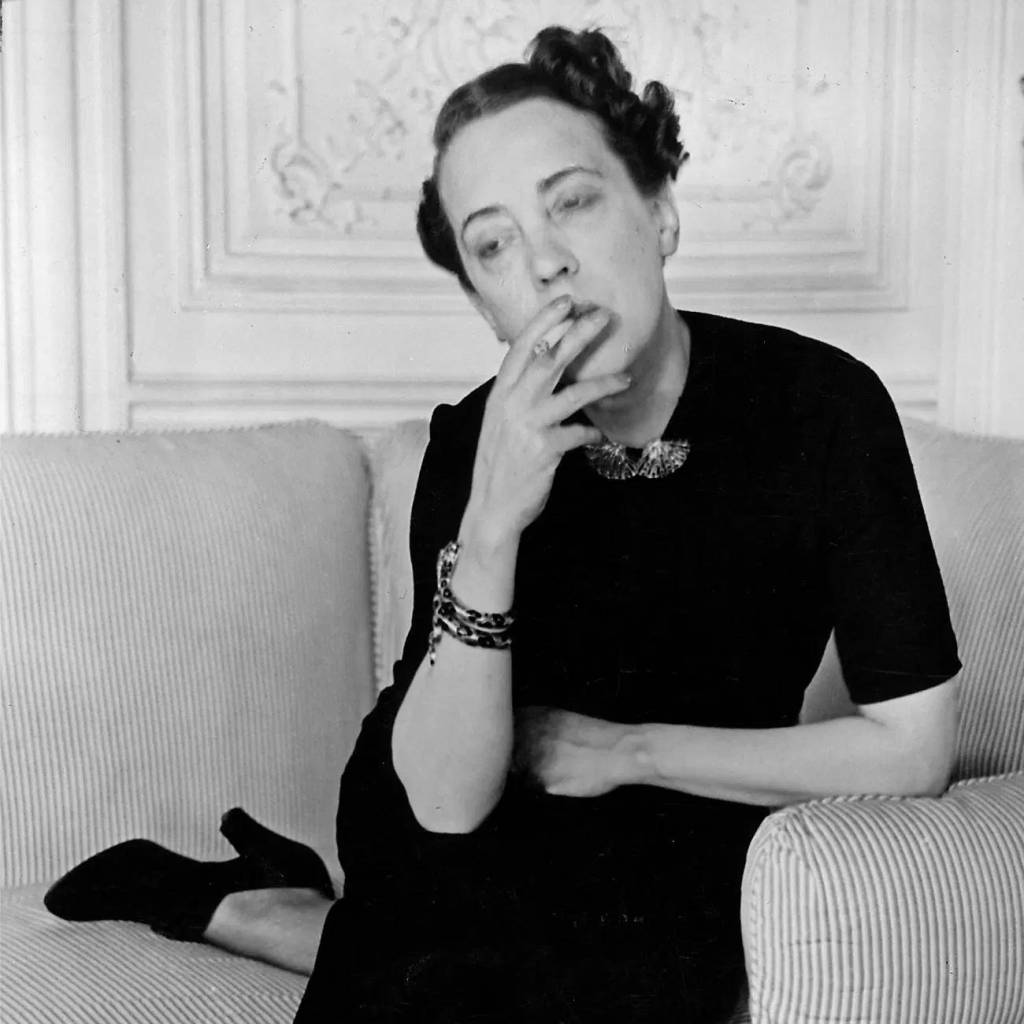
When Charles Collingwood, the CBS correspondent in Paris, interviewed Schiaparelli he asked her.
‘Mrs. Schiaparelli, which are the simple rules that a woman should follow when she goes to buy a dress?‘
Schiaparelli’s answer was anticommercial and unconventional.
‘She must buy only what she needs. The less the better. A well dressed woman does not need many dresses.’
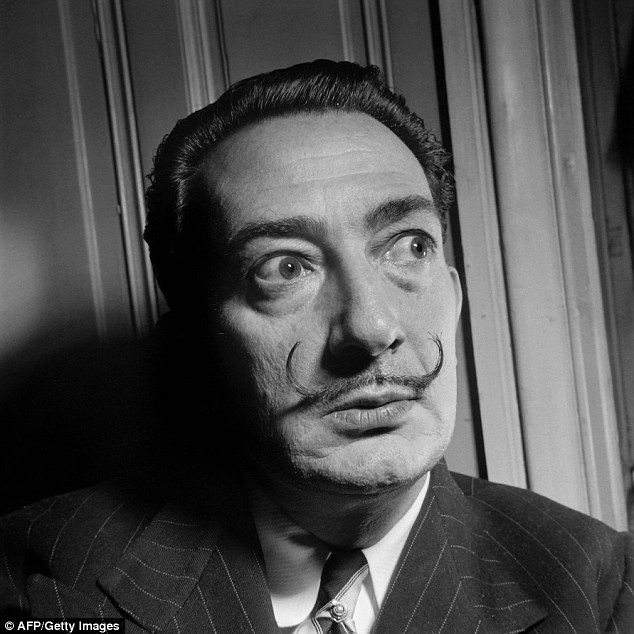
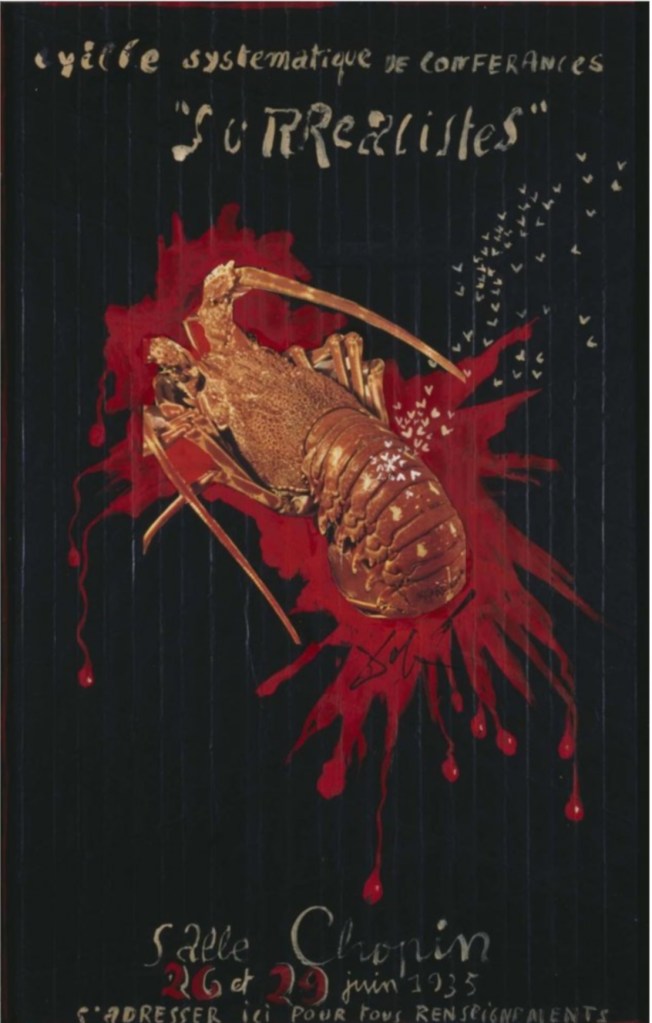
In the 1930s the Spanish artist Salvador Dali (1904 – 1989) placed red lobsters in three of his works. One sits on top of a woman’s head (Portrait of Gala with Lobster, 1933, private collection), another sits on a telephone ( the ‘lobster phone’ of 1935, Tate Gallery, London), and a third is the main theme of a poster advertising a series of lectures given by surrealists with lobster as the subject (Systematic Cycle of Surrealist Lectures ‘The Lobster’, 1935, Museo Nacional Centro de Arte Reina Sofía, Madrid).
Dali was in Schiaparelli’s social and artistic circle when she returned to Paris. They first collaborated in 1935 on a drawing that was published in a newspaper. Since then they were frequently exchanging innovative ideas. In early 1937 Wallis Simpson asked Schiaparelli to make her a unique night dress. At that time the lobster phone was still in everyone’s mind, and no one was surprised when Dali suggested to design a lobster dress. Wallis Simpson approved the suggestion in February 1937 and asked Schiaparelli to proceed with the making of the dress without delay.
The selected colour of the dress was the ivory of a wedding dress. The dress was made of white silk and had a purple – pink belt in the waist. Schiaparelli used the dress cut that Wallis Simpson always liked with an unusual addition. An orange – pink lobster painted by Dali’s hand. The cooked lobster was inside a black outline.
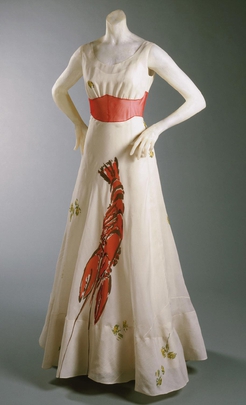
The heat destroys all colouring agents of the lobster shell, leaving intact the rosy red with orange touches. Dali added some parsley twigs here and there, enhancing the viewer’s impression that this is a lobster meal. The lobster’s triangular tail covers the genital’s area. Judith Watt wrote in Vogue (On Schiaparelli, 2012), that the lobster was considered by some to be a symbol pf female sexuality that is potentially a castrating entity. Dali;s design was transferred to the silk fabric by designer Sache, who later worked with some of the best fashion designers and dressmakers like the Basque Balenciaga.
Bettina Bergery, who was at the time Schiaparelli;s assistant recalls.
‘Salvador wanted to cover the dress with mayonnaise. He believed that this was an expression of erotic paranoia, but Schiaparelli did not let him, saying that her clients would not like it. ‘
Dali’s intention emphasizes the uniqueness as well as the fragility of the dress, but it is likely that behind it were the concept that articles of fashion are not real art, they are consumables, like food. Schiaparelli had a different view. She considered her works as works of art and wanted to leave then intact behind her after her death.
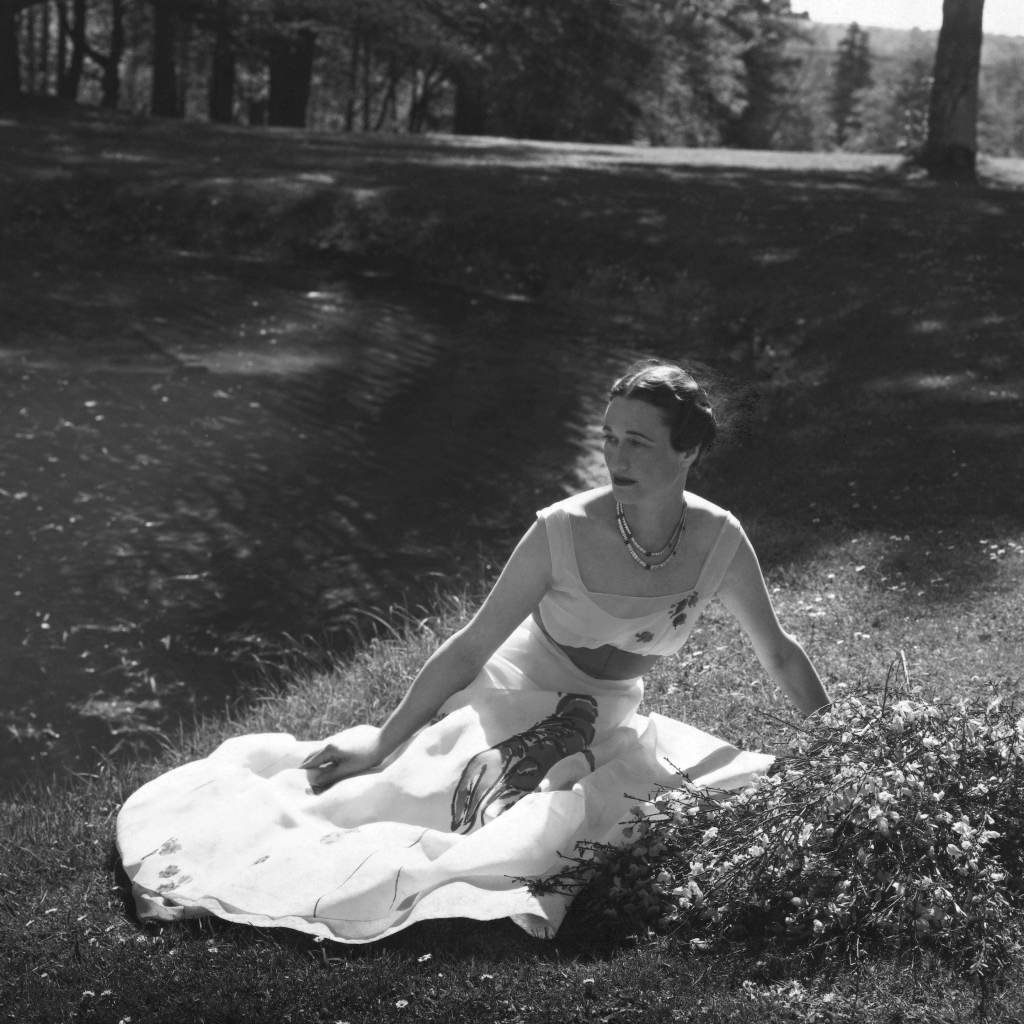
Simpson wore the dress for the first time on the 2nd May 1937 while she was in a castle by the river Loire in France. She was photographed by Cecil Beaton. The castle belonged to an American businessman who organized the 1937 tour of Edward – Simpson in Nazi Germany.
The dress is unique, there is no other, and belongs to the collection of the Philadelphia Museum of Art in the USA. After 1937 Simpson returned the dress to Schiaparelli who kept it until 1969, when she donated it to the museum.
Simpson maintained her friendship with Schiaparelli for the next 40 years. and although the Schiaparelli House of Fashion was closed 1954, Simpson never became a customer of Chanel in order not to upset her friend. In addition to the dresses she designed, Schiaparelli created her own colour, the Schiaparelli pink.
 Gastrolvios